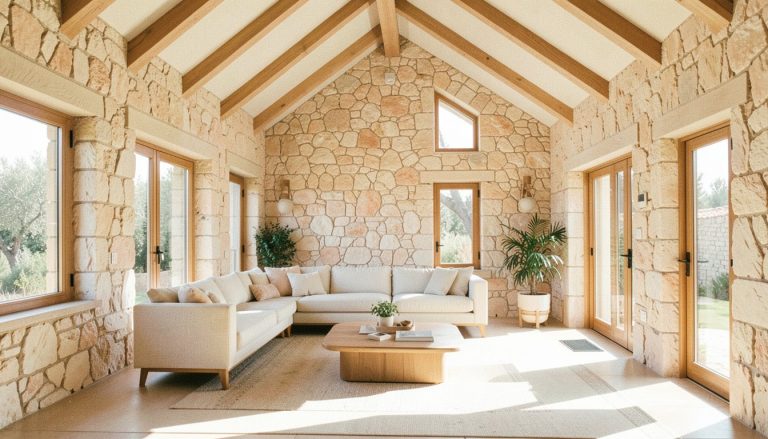
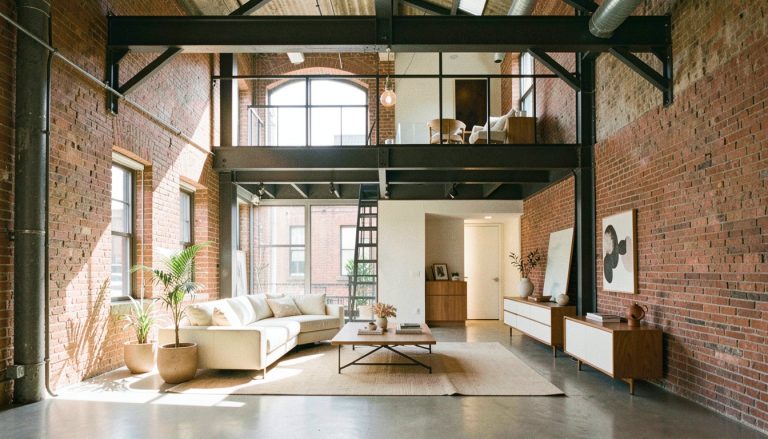
A villa in St Martin: materials that survive salt air, humidity and sun
In St Martin, an interior does not age the way it does in Europe or North America. Salt-laden air, year-round humidity and very strong sunlight wear out anything that was not chosen for them. Here is what matters, material by material.
Metals: not all stainless steel is equal
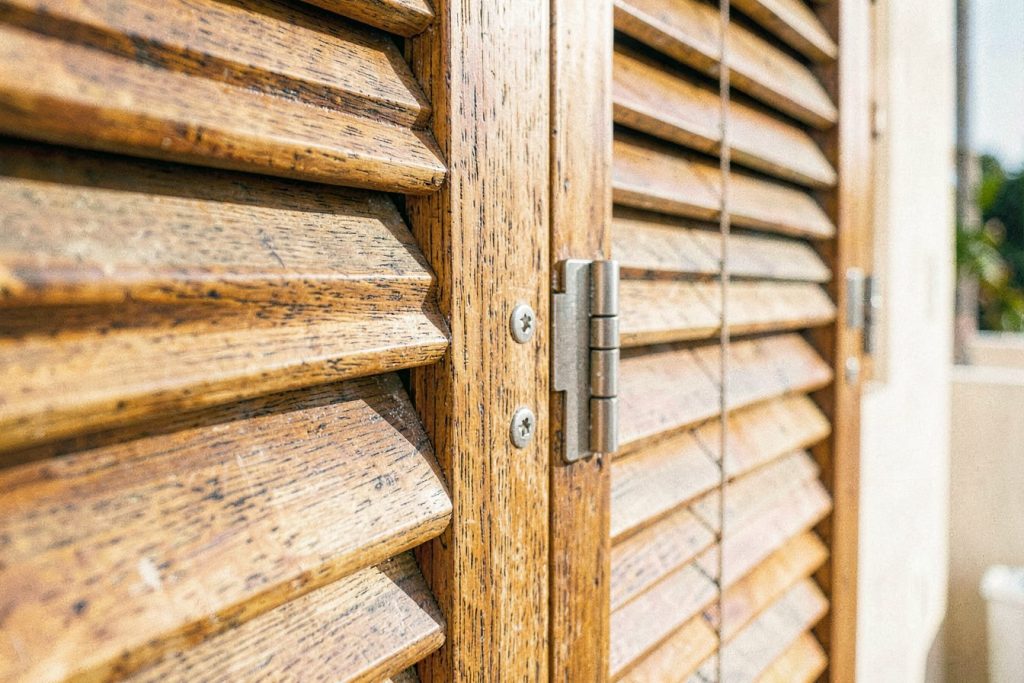
By the sea, salt attacks metal far faster than elsewhere. Standard 304 (A2) stainless steel can show rust pitting within months when exposed to salt air. Grade 316 (A4) contains molybdenum, which makes it much more resistant: that is the grade to specify for handles, hardware and fixings, indoors and on terraces.
Brass and bronze do not rust, but they develop a patina, which is an aesthetic choice to make knowingly. For light structures and frames, marine-grade treated aluminium holds up far better than painted steel.
Wood: choose the species and the panel
Outdoors, dense, naturally durable species such as teak or iroko handle sun and rain, and weather to a soft silver if left unoiled. Indoors, the trap is elsewhere: particleboard and standard MDF swell with moisture, especially in kitchens and bathrooms. Marine plywood, moisture-resistant MDF or compact laminates are the better choice anywhere near water.
Fabrics: think UV and mould
On a terrace, ordinary fabric fades within a season. Solution-dyed acrylic keeps its colour in the sun and dries quickly, which limits mould. Indoors, linen and cotton remain pleasant in this climate, as long as covers are removable and washable: they extend the life of sofas and cushions.
Floors: ceramic has the edge
Porcelain tile is the tropical home’s best friend: unbothered by water, salt or sand, and cool underfoot. Natural stone is beautiful but often porous: it needs sealing and care so it does not stain or absorb salt. Unstabilised solid wood floors move a lot with humidity and are best kept to air-conditioned rooms.
Air: a layout that lets the house breathe
In this climate, a closed, poorly ventilated cupboard quickly turns damp. Wardrobes and storage benefit from ventilation, with slatted doors or discreet grilles. The layout should also let air move between rooms: a well-designed interior works with natural ventilation and air conditioning, not against them.
Hurricane season: plan where everything goes
From June to November, a storm warning can mean moving outdoor furniture, cushions and light objects to shelter within hours. A good layout plans storage for this from the start. Protecting openings, shutters and glazing is a matter for your architect and contractors: the interior design simply has to account for it.
In short
A durable interior in St Martin comes down to a few principles: 316 rather than 304 stainless steel, moisture-resistant panels, solution-dyed fabrics outdoors, ceramic floors, ventilated storage and a planned place for hurricane season. The studio builds these into every project, before style even comes into it.
Dana Ben Moha, interior architecture, St Martin
Planning a villa or interior project in St Martin?
Tell me about it in a few words and the studio will reply personally.